


 OpenCredence
Build a higher-trust hospital network from verified evidence.
OpenCredence gives insurers and TPAs one view of provider quality. It scores and monitors hospitals on accreditation, infrastructure, outcomes and patient signals, with every signal traceable.

- Built for
- InQuantic product
- Sector
- Insurance
- Platform
- Web platform
- Status
- Independently tested in the GIC test
- See it live
- opencredence.in
The problem
Payers and providers spend billions together. Trust is still negotiated manually.
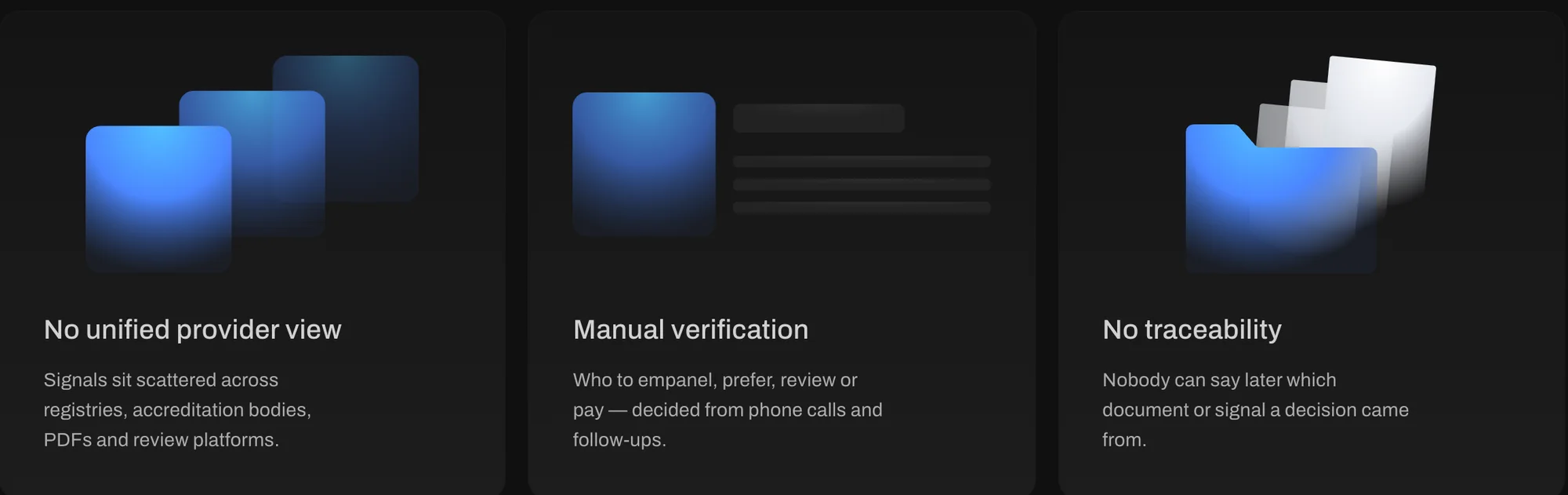
Provider signals sit scattered across registries, accreditation bodies, PDFs and review platforms. Decisions about who to empanel, prefer, review or pay come out of phone calls and follow-ups.
And later, nobody can say which document or signal a decision came from.
Our approach
Earn the score. Then show your working.
A single number is only useful if a reviewer can defend it. So we treated the score as the last step of a verification pipeline, with weighting that is transparent and thresholds the payer defines.
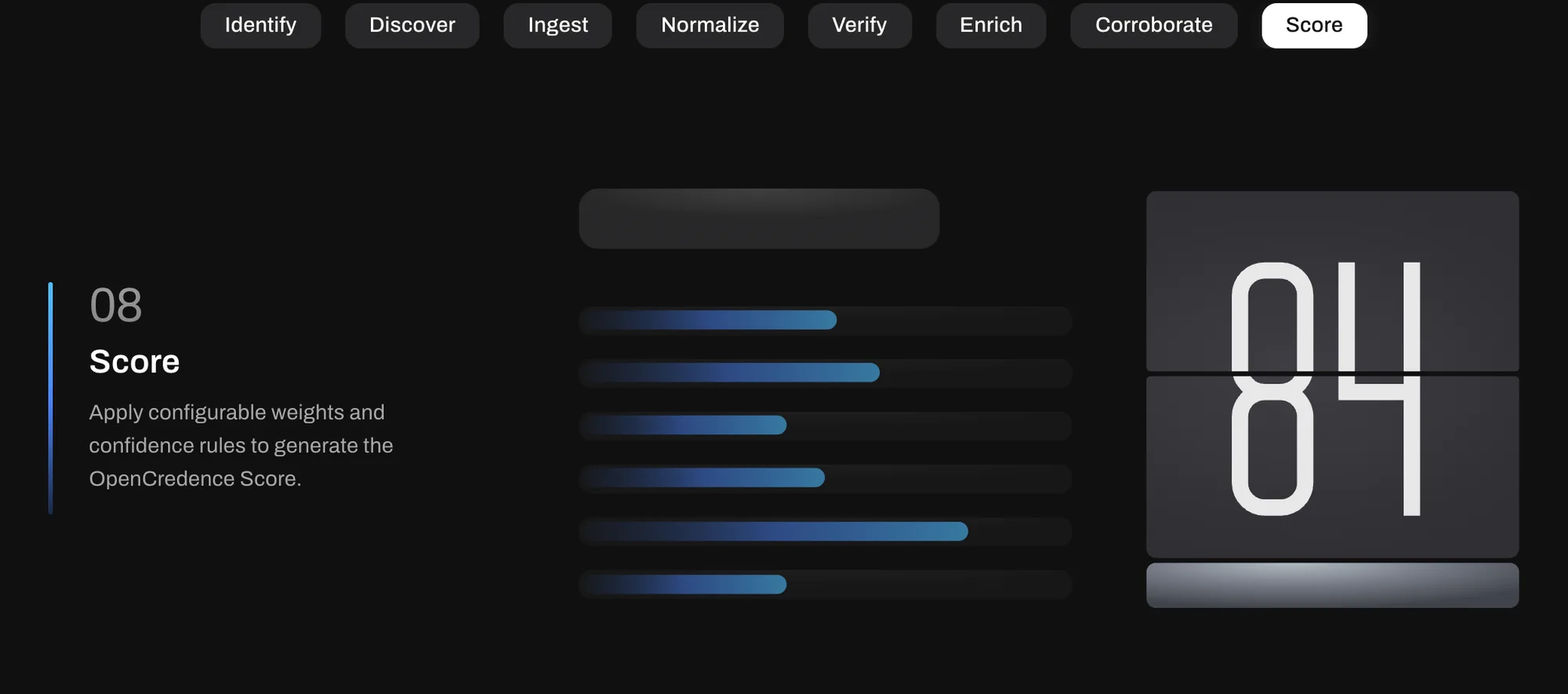
Every record passes eight gates: identify, discover, ingest, normalize, verify, enrich, corroborate and score.
What we built
One provider. Hundreds of signals. One view.
Hospital profile
A decision-ready view of each provider
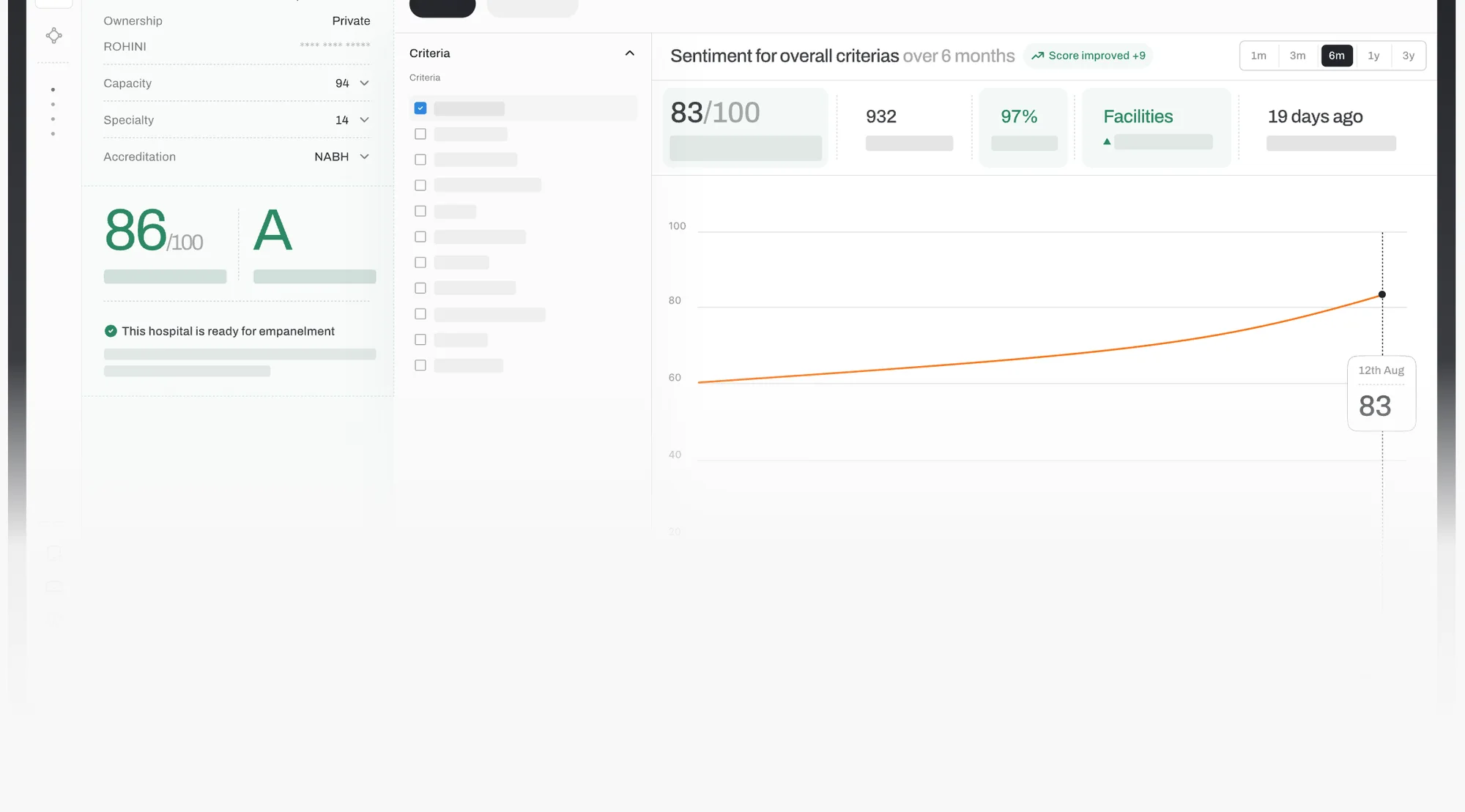
One score with every signal traceable, transparent weighting, and output that comes with reason codes a review team can act on.
Pipeline
Eight gates behind every record
Each hospital is resolved against trusted provider identifiers, then its data is normalized, verified, enriched and corroborated. Only then do configurable weights and confidence rules produce the OpenCredence Score.
Roadmap
From categorization to dynamic tariffing
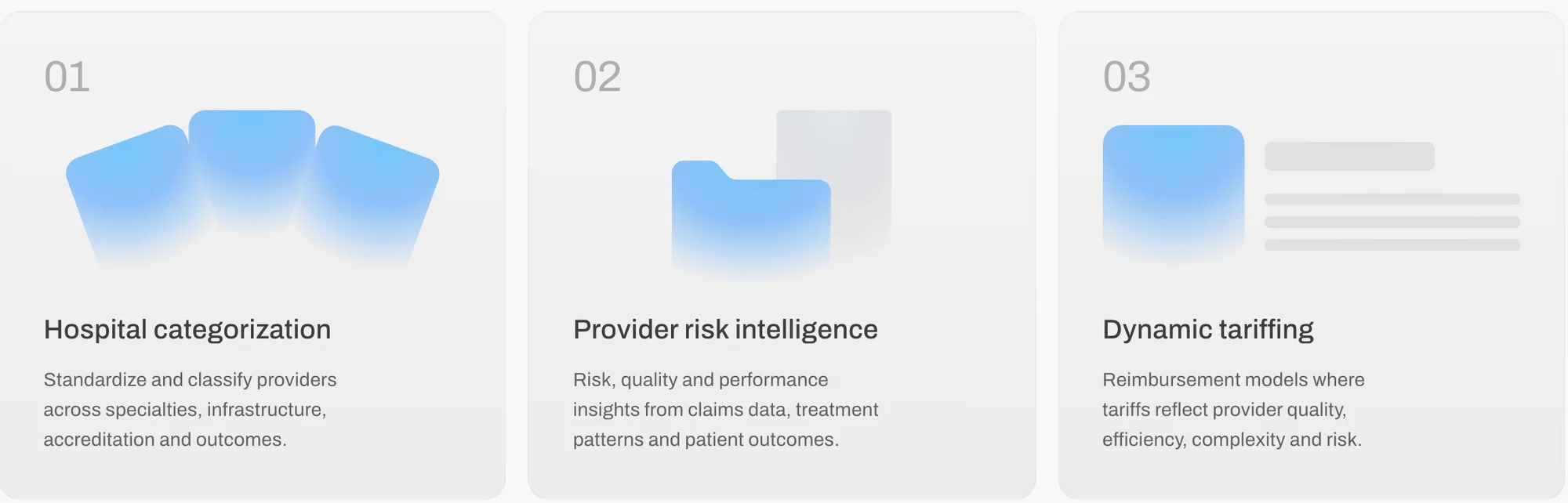
Today it standardizes and classifies hospitals. Next come risk insights from claims and treatment patterns, then reimbursement models where tariffs reflect quality, efficiency, complexity and risk.
Where it stands
Tested independently. Scaled on evidence.
In the GIC test, OpenCredence turned hospital records and public comments into independently tested provider intelligence. The proposed next step is a controlled deployment, with weightage configured around the payer's own priorities.
- 64
- Hospital records in the GIC test
- 10,000+
- Public comments processed
- 8
- Gates passed by every record
- ~2.5 mo
- Proposed deployment for 1,000 hospitals
Questions
What people ask about OpenCredence.
Yes. Weighting is transparent and configurable, and thresholds are defined by the payer.
Yes. That was the point of the design: every signal behind a score is traceable, and output comes with reason codes.
Services in this project
- Platforms
- Automation
- Websites
- Provider intelligence
- Insurers and TPAs
- Data verification
- Scoring